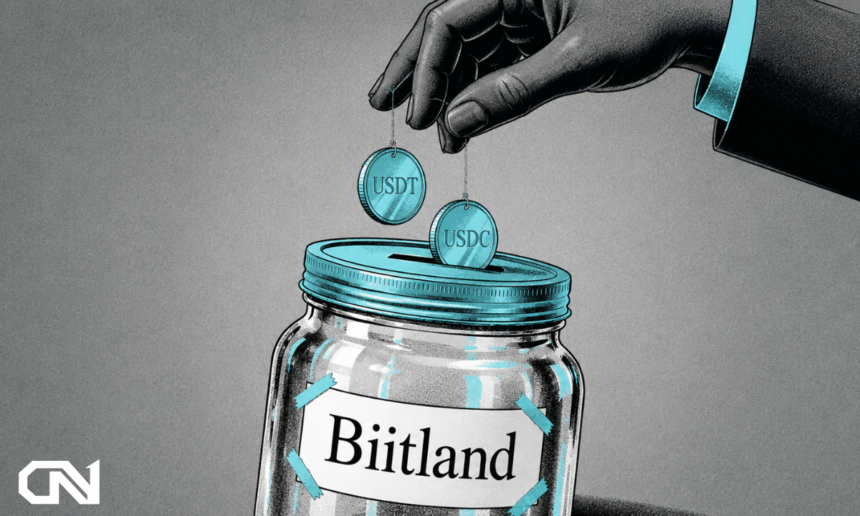




Stablecoins are one of the most useful parts of crypto, but they are also one of the easiest areas to misunderstand. They look simple because many of them aim to stay close to $1. In practice, the safety of a stablecoin depends on reserves, liquidity, regulation, smart contracts, issuer reputation, and how easy it is to redeem or move the asset.
- What Are Biitland.com Stablecoins?
- Why Stablecoins Matter in Crypto
- Platform Transparency Audit: What Users Can and Cannot Verify
- How Biitland.com Stablecoins May Work
- How to Use Stablecoin Assets on Biitland
- Benefits of Biitland.com Stablecoins
- Lower Volatility Than Regular Crypto
- Faster Crypto Transfers
- Useful for Traders
- Potential Business Use
- Easier Onboarding
- Risks Users Should Check First
- Stablecoin Regulation in 2026: Why It Matters for Biitland Users
- Biitland.com Stablecoins vs Major Stablecoin Options
- Pros and Cons
- Research Desk Verdict
- Safety Checklist Before Using Biitland Stablecoin Assets
- Final Verdict
- FAQ
- Disclaimer
That is why people searching for biitland.com stablecoins usually want more than a basic definition. They want to know what Biitland is, whether its stablecoin-related claims make sense, how users may interact with stable assets on the platform, and what risks should be checked before trusting it with funds.
Public information around Biitland is still thin compared with major stablecoin issuers such as Tether or Circle. Search results show several articles describing Biitland stablecoins as digital assets focused on stability, payments, transfers, and blockchain-based financial tools. One indexed Biitland-related page describes the project as a platform for “secure and stable digital assets,” while another press-release style result says Biitland launched a digital platform focused on access to stable digital assets and blockchain-based financial tools.
That sounds promising at a high level, but users should be careful. A platform talking about stablecoins is not the same as a regulated stablecoin issuer with audited reserves, deep exchange liquidity, and years of redemption history. The right way to evaluate Biitland is to compare its claims against what users expect from established stablecoin products.
Financial Risk Warning: Stablecoins are not risk-free. They can de-peg, lose liquidity, face issuer or platform restrictions, and may be affected by regulation. Historical stability does not guarantee future safety. This article is for research and education only, not financial advice.
What Are Biitland.com Stablecoins?
The phrase biitland.com stablecoins appears to refer to stable digital assets connected to the Biitland ecosystem or discussed through Biitland-related content. Public articles describe them as crypto assets designed to reduce volatility, support payments, improve transaction efficiency, and help users hold value in digital form. Several ranking pages also describe Biitland stablecoins as pegged assets backed by reserves or supported by smart-contract mechanisms.
A stablecoin is a cryptocurrency designed to maintain relatively stable value, often by being pegged to fiat currency such as the U.S. dollar. CoinMarketCap defines stablecoins as blockchain-based cryptocurrencies with low volatility that are usually pegged to fiat currencies or backed by assets such as cash, Treasury securities, crypto collateral, or commodities.
That definition is important because “stable” does not mean risk-free. A stablecoin may aim to track $1, but its ability to do that depends on how it is structured. A fiat-backed coin like USDC is different from a crypto-collateralized coin like DAI. A gold-backed token behaves differently from a dollar-backed token. Algorithmic designs carry different risks again.
So the useful question is not only “does Biitland offer stablecoins?” The better question is: what kind of stable assets are being offered, what backs them, and can users independently verify the claims?
You may also like: Yield & Strategy When Stablecoin Yields Are Sustainable vs Incentive-Driven.
Why Stablecoins Matter in Crypto
Stablecoins solve a practical problem. Bitcoin, Ethereum, Solana, and most altcoins move sharply. That volatility makes them useful for speculation, but difficult for everyday payments, business settlement, savings, or short-term treasury management.
Stablecoins give users a way to stay inside crypto rails without taking full exposure to market swings. Britannica explains that stablecoins aim to maintain price stability by pegging their value to a reference asset such as the U.S. dollar, although the peg is a goal rather than a guarantee.
Users commonly rely on stablecoins for:
- Holding dollar-like value on-chain
- Moving funds between exchanges
- Sending cross-border payments
- Providing liquidity in DeFi
- Avoiding short-term crypto volatility
- Settling invoices or business payments
- Parking funds while waiting for market entries
That utility explains why stablecoins have become central to crypto markets. CoinMarketCap data shows Tether’s USDT remains one of the largest crypto assets by market cap and daily trading volume, with USDT used widely across centralized exchanges, decentralized exchanges, and payment flows.
Biitland’s stablecoin angle should be judged against that real-world use case. If it helps users access dollar-like digital assets safely, clearly, and cheaply, it has potential value. If the platform cannot explain reserves, redemptions, wallets, fees, or custody, users should slow down.
Platform Transparency Audit: What Users Can and Cannot Verify
Before using any stablecoin platform, the most important question is not whether the website sounds professional. The better question is whether users can verify the claims.
For Biitland, public information presents the platform as focused on stable digital assets and blockchain-based financial tools. That gives users a starting point, but it does not yet provide the same level of transparency seen from large stablecoin issuers such as Circle, Tether, or MakerDAO.
Here is the practical audit view:
| Transparency Point | What Users Should Look For | Why It Matters |
|---|---|---|
| Stablecoin issuer | Whether Biitland issues its own stablecoin or lists third-party assets | Issuer risk changes depending on who controls reserves |
| Reserve backing | Cash, Treasuries, crypto collateral, commodities, or algorithmic design | Backing quality affects de-peg risk |
| Attestation or audit | Public reserve reports from independent firms | Helps users verify that backing claims are real |
| Token contract | Verified contract address on a trusted explorer | Confirms the asset users are interacting with |
| Supported networks | Ethereum, Tron, Solana, BNB Chain, Base, or others | Wrong-network transfers can cause losses |
| Redemption process | How users convert stablecoins back to fiat or other assets | Stablecoins are only useful if exits work |
| Withdrawal rules | Clear limits, fees, and processing times | Prevents surprises after funds are deposited |
| Custody model | Whether users control funds or Biitland holds them | Custody changes the risk profile |
Research Desk Insight: Biitland should be treated as a platform to research carefully, not as a proven stablecoin issuer by default. Unless Biitland clearly publishes reserve attestations, token contracts, redemption terms, and custody details, users should start with small transactions and compare it against more established stablecoin providers.
How Biitland.com Stablecoins May Work
Public pages describing Biitland stablecoins mention ideas such as asset backing, algorithmic adjustments, transparency, compliance, digital payments, and easier access to stable crypto transactions.
Those are common stablecoin themes, but they need verification.
A user should look for answers to five questions:
| Question | Why It Matters |
|---|---|
| What asset is the stablecoin pegged to? | A USD peg, gold peg, or crypto-collateralized model changes the risk profile. |
| Who issues or controls the asset? | Issuer reputation matters for redemption and compliance. |
| What backs the stablecoin? | Cash, Treasuries, crypto collateral, commodities, or algorithms carry different risks. |
| Can reserves be verified? | Audits or attestations reduce uncertainty. |
| Where can users redeem or trade it? | Liquidity matters when users want to exit. |
If Biitland only lists major third-party stablecoins such as USDT, USDC, DAI, FDUSD, or PAXG, the evaluation is mostly about platform access, fees, custody, and supported networks.
If Biitland issues its own stablecoin, the evaluation becomes stricter. Users then need reserve reports, issuer details, audits, redemption terms, token contracts, supported chains, circulating supply, and liquidity data.
How to Use Stablecoin Assets on Biitland
Because public documentation is limited, the safest way to explain usage is from a general stablecoin-platform perspective rather than making unsupported claims.
A typical user flow would look like this:
- Check the official domain
Confirm the correct Biitland website before creating an account or connecting a wallet. Fake domains are common in crypto. - Review supported stablecoins
Look for the exact assets available. USDT, USDC, DAI, FDUSD, and PAXG are very different products. - Check the network
A stablecoin may exist on Ethereum, Tron, BNB Smart Chain, Solana, Base, Arbitrum, Polygon, or other networks. Sending funds on the wrong network can cause loss. - Compare fees
Review deposit fees, withdrawal fees, trading spreads, swap costs, and network fees. - Start small
Test a small deposit and withdrawal before moving larger balances. - Confirm redemption options
Stablecoin access is useful only if users can exit. Check whether you can withdraw to an external wallet or convert back to fiat. - Track platform notices
Stablecoin support can change due to regulation, liquidity, or issuer decisions.
That workflow is not exciting, but it protects users. Most stablecoin losses come from bad assumptions: wrong network, fake site, frozen withdrawals, poor liquidity, or trusting a product before checking how it works.
Benefits of Biitland.com Stablecoins
The main appeal of stablecoin assets on Biitland would be convenience. Users may want one place to access stable digital assets, move value, reduce crypto volatility, or use blockchain-based payment tools.
Lower Volatility Than Regular Crypto
Stablecoins are designed to stay close to a reference value. That makes them more useful for payments, savings, transfers, or short-term capital parking than volatile assets like Bitcoin or Ethereum.
Faster Crypto Transfers
Stablecoins can move across blockchain networks without relying on slow bank wires. Speed depends on the network used, but crypto settlement is often faster than traditional cross-border payment rails.
Useful for Traders
Traders often move into stablecoins during uncertain markets instead of cashing out to banks. Stablecoins also help users move between exchanges or DeFi protocols.
Potential Business Use
Merchants, freelancers, and digital businesses may use stablecoins for settlement where banking access is slow or expensive. The value stays more predictable than most crypto assets.
Easier Onboarding
A platform that explains stablecoins clearly can help new users enter crypto without immediately exposing them to high-volatility tokens.
Those benefits are real, but they are not unique to Biitland. USDT, USDC, DAI, FDUSD, and other established stablecoins already serve similar roles across major exchanges and wallets.
Risks Users Should Check First
Stablecoins carry real risks. The bigger issue with newer or lesser-known platforms is not the concept of stablecoins. The risk is whether the platform has enough transparency.
Reserve Risk
If a stablecoin claims to be backed by reserves, users should know where those reserves are held and what they contain. Cash and short-term U.S. Treasuries are very different from volatile crypto collateral or opaque assets.
Tether’s reserve composition often receives market attention because USDT is the largest stablecoin. Reuters reported that Tether’s reserves include U.S. Treasury bills, gold, Bitcoin, and other assets, showing why reserve composition matters for stablecoin risk analysis.
Liquidity Risk
A stablecoin may show a $1 price in theory but still be hard to exit if markets are thin. Liquidity matters more than marketing.
Platform Risk
Even if the stablecoin itself is sound, users may face risk from the platform holding or routing the asset. Account freezes, withdrawal delays, unclear terms, or security failures can create losses.
Smart Contract Risk
If assets are managed through smart contracts, bugs or exploits can affect funds.
Regulatory Risk
Stablecoin regulation is evolving. Rules around issuance, reserves, redemption, compliance, and user access can affect platforms quickly.
Algorithmic Risk
Algorithmic stablecoins have a poor track record during stress. Designs that rely heavily on market incentives instead of real reserves can break under pressure. Users should be extra careful if any Biitland-related product claims to maintain stability through algorithms rather than clear collateral.
Stablecoin Regulation in 2026: Why It Matters for Biitland Users
Stablecoin regulation has become one of the biggest issues in crypto because stablecoins now sit between digital assets, payments, banking, and cross-border settlement. For users, regulation affects more than headlines. It can change which stablecoins are available, where they can be redeemed, what disclosures issuers must provide, and how platforms handle compliance.
Regulators generally focus on four areas:
- Reserve quality: whether stablecoins are backed by cash, Treasury bills, bank deposits, commodities, crypto collateral, or other assets.
- Redemption rights: whether users can reliably convert stablecoins back into fiat value.
- Issuer transparency: whether reserve reports, audits, and risk disclosures are public.
- Consumer protection: whether users understand custody, transfer, freezing, and platform risks.
For Biitland users, regulation matters because a platform offering stablecoin access may depend on third-party issuers, banking partners, supported jurisdictions, and blockchain networks. If rules change, a platform may pause deposits, remove certain assets, restrict withdrawals, or update user verification requirements.
This is why users should not judge stablecoins only by price stability. A coin holding near $1 today can still carry legal, liquidity, and platform risk. Strong regulation can improve trust when it forces better reserve disclosures and redemption standards. Poorly explained regulation, however, can create sudden access problems for users who do not understand the platform’s terms.
A useful rule: before holding meaningful funds in any stablecoin platform, check whether the platform explains its supported jurisdictions, compliance requirements, redemption process, and asset restrictions. If those details are unclear, keep exposure small.
Biitland.com Stablecoins vs Major Stablecoin Options
| Option | Best For | Main Strength | Main Risk |
|---|---|---|---|
| Biitland stablecoin assets | Users exploring Biitland’s stable digital asset platform | Potential convenience and platform-specific access | Limited public verification compared with major issuers |
| USDT | Traders needing deep liquidity | Largest stablecoin by market cap and volume | Reserve/transparency debates and issuer risk |
| USDC | Users who prefer regulated U.S.-linked issuer transparency | Strong compliance positioning and institutional adoption | Centralized issuer controls |
| DAI | DeFi users wanting decentralized collateral model | Deep DeFi integration | Crypto collateral and governance risk |
| PAXG | Users wanting gold-backed crypto exposure | Commodity-backed structure | Gold custody and market liquidity risk |
CoinMarketCap describes fiat-backed stablecoins such as USDT and USDC as among the most common stablecoin types, while Britannica notes that not all stablecoins are backed by the asset they track and that stablecoins are not the same as cash.
That is why comparison matters. Biitland may be useful as an access point, but users should compare available stablecoins against established alternatives before committing funds.
You may like: Can You Mine Solana? SOL Mining Explained.
Pros and Cons
Pros
- Stablecoin focus can help users avoid crypto volatility
- Useful for payments, transfers, and trading liquidity
- May offer a simpler entry point for digital dollar-style assets
- Stablecoins are easier to understand than many speculative tokens
- Potential fit for users who want blockchain payments without holding volatile crypto
Cons
- Public information around Biitland is limited compared with major issuers
- Users need clarity on custody, redemption, reserves, and fees
- Not all stablecoins are equally safe
- Platform risk remains even when the asset is stable
- Algorithmic or poorly backed models can lose their peg
- Newer platforms need stronger proof before users trust large balances
Research Desk Verdict
Our take: Biitland.com stablecoins should be viewed as a research-first stablecoin access topic, not a platform users should trust blindly.
The useful angle is that Biitland appears to focus on stable digital assets, which is a real and growing crypto use case. Stablecoins are used for payments, trading liquidity, cross-border transfers, and holding dollar-like value on-chain. That gives the topic practical value.
The weak point is transparency. Compared with major stablecoin ecosystems, public information around Biitland does not yet give users enough detail to confidently verify reserves, redemption rights, custody model, supported contracts, platform audits, or withdrawal reliability.
Best fit:
- Users learning how stablecoin platforms work
- Small test transactions
- Comparing stablecoin access points
- Researching alternatives to major exchanges
Not a good fit:
- Large balances without withdrawal testing
- Users who need audited reserve transparency
- Anyone expecting stablecoins to be risk-free
- Users who cannot verify contracts, fees, or redemption terms
A safer approach is to treat Biitland as one option to research, while comparing it with better-known stablecoins such as USDT, USDC, DAI, FDUSD, and PAXG.
Safety Checklist Before Using Biitland Stablecoin Assets
Before using any stablecoin feature connected to Biitland, check:
- Is the website domain correct?
- Is the stablecoin issued by Biitland or a third-party issuer?
- What asset is it pegged to?
- What backs the peg?
- Are reserves audited or attested?
- Can users withdraw to an external wallet?
- Which networks are supported?
- Are fees and spreads visible before transactions?
- Is there a clear redemption process?
- Are terms of service and risk disclosures easy to find?
- Has the platform reported security audits?
- Are user reviews credible and consistent?
A platform that passes these checks deserves more attention. A platform that avoids these answers should not hold serious funds.
Final Verdict
The keyword biitland.com stablecoins points to a topic with real user interest, but the current public information still needs careful handling. Stablecoins are valuable tools in crypto, especially for payments, trading, and holding dollar-like value on-chain. Biitland appears to position itself around stable digital assets, but users should verify exactly what assets are supported, how they are backed, who controls custody, and how withdrawals work.
Stablecoins are not automatically safe because they aim to stay stable. The best stablecoin products combine clear backing, strong liquidity, transparent redemption, reputable issuers, and reliable platform operations.
For now, Biitland is worth researching, but not worth trusting blindly. Start small, compare alternatives, verify every claim, and treat stablecoin safety as a checklist—not a slogan.
FAQ
- What are Biitland.com stablecoins?
Biitland.com stablecoins appear to refer to stable digital assets connected to Biitland’s stablecoin-focused platform or content ecosystem. - Are Biitland.com stablecoins safe?
They may offer useful stablecoin access, but safety depends on reserves, custody, liquidity, audits, fees, and withdrawal reliability. - Can I use Biitland stablecoins for payments?
Stablecoins are commonly used for payments and transfers, but users should confirm Biitland’s supported assets, networks, and withdrawal rules first. - Are stablecoins the same as cash?
No. Stablecoins may track fiat value, but they are privately issued crypto assets and can carry issuer, reserve, liquidity, and platform risk. - What are better-known alternatives?
USDT, USDC, DAI, FDUSD, and PAXG are better-known stablecoin options, each with different backing models and risks.
Disclaimer
This content is for informational and educational purposes only and does not constitute financial, investment, legal, or tax advice. Cryptocurrency markets are volatile. Always do your own research and consult a qualified professional before making financial decisions.