

Quick Summary
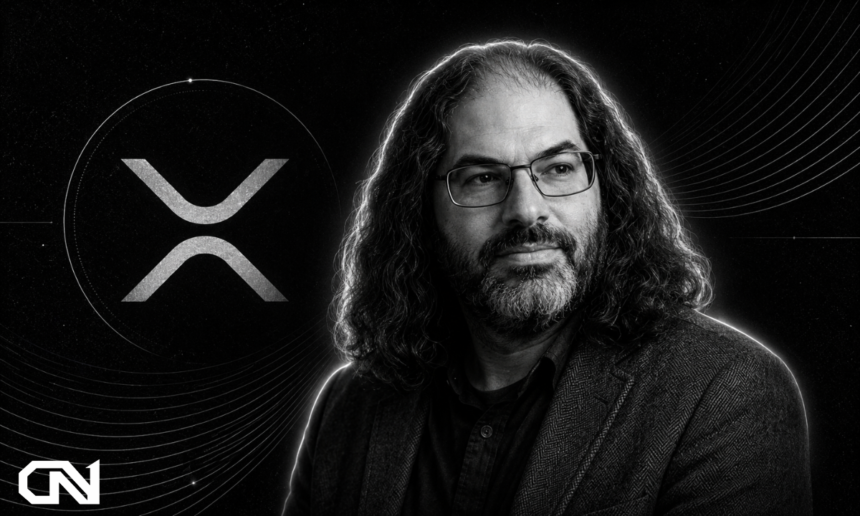
The XRP Ledger Foundation has appointed Ripple CTO Emeritus David Schwartz as an Honorary Board Member, giving the Foundation access to one of the XRP Ledger’s original technical architects at a time when XRPL is trying to mature beyond payments. The move should not be read as Ripple taking over the Foundation. A cleaner interpretation is that XRPL’s independent ecosystem body is adding deep protocol experience while continuing to position itself around open governance, validator infrastructure, core development, and long-term ecosystem coordination.
Why This Appointment Matters
David Schwartz is not a normal advisory name in the XRP ecosystem. Known widely as JoelKatz, he was one of the original architects behind the XRP Ledger, working alongside Arthur Britto and Jed McCaleb in the early design of the network. His appointment gives the XRP Ledger Foundation a technical voice with rare historical context around XRPL’s design, consensus assumptions, validator structure, amendment process, and long-term development direction.
The Foundation said Schwartz’s technical insight and long-term perspective would help strengthen its technical stewardship of the ecosystem. That phrase matters because XRPL is no longer only being discussed as a payments chain. The network is being pushed toward stablecoins, tokenized assets, compliance-friendly infrastructure, institutional settlement, and broader developer activity.
For builders, this is a governance signal. It suggests the Foundation wants stronger protocol-level guidance from someone who understands how XRPL was built, how it has survived more than a decade of market cycles, and where its architecture may need to evolve next.
Not a Ripple Takeover
The safest framing is important here: the appointment does not mean Ripple has taken control of the XRP Ledger Foundation.
Schwartz’s position is described as Honorary Board Member, not executive chair, CEO, or controlling director. The Foundation also describes its own mission as keeping the XRP Ledger open, transparent, and accessible, while supporting decentralized infrastructure, validator operations, network monitoring, technical standards, governance, and ecosystem growth.
That distinction matters because XRP has long faced debate around Ripple’s influence over the ecosystem. Adding a Ripple-linked veteran to the Foundation naturally raises questions, but the role itself appears advisory and technical rather than operational control.
A fair reading is this: XRPL Foundation is adding Ripple’s most recognizable protocol expert without formally becoming Ripple’s extension.
Schwartz’s New Role After Stepping Back From Ripple CTO Duties
The timing also fits Schwartz’s broader transition. In 2025, he announced that he would step back from daily CTO duties at Ripple and move into a CTO Emeritus role while remaining active in the XRP community. CoinDesk reported that Dennis Jarosch, Ripple’s senior vice president of engineering, would lead technical operations going forward.
That move freed Schwartz from daily executive responsibility while keeping him close to XRPL’s future direction. His Foundation role now makes that shift more concrete. Instead of only serving Ripple’s corporate roadmap, Schwartz can contribute to wider XRPL ecosystem stewardship through an honorary board position.
For the XRP community, this may be more meaningful than a normal leadership update. Schwartz has repeatedly been one of the few figures who can speak both to Ripple’s institutional strategy and to the technical mechanics of the XRP Ledger itself.
Why XRPL Foundation Needs Technical Stewardship Now
The XRP Ledger is entering a more competitive phase.
XRPL’s official documentation positions the network as a public, decentralized blockchain built for business, with low transaction costs, high performance, sustainability, and an open-source environment for builders.
That positioning now needs stronger developer execution. Payments remain important, but the market is moving toward tokenized real-world assets, stablecoins, cross-chain settlement, compliance-aware DeFi, and institutional blockchain workflows. For XRPL to stay relevant in that environment, governance and technical coordination matter more than branding.
The Foundation’s working areas already point in that direction. Its public site lists infrastructure support, validator operations, network monitoring, core development, technical standards, governance, and sustainability as part of its work.
Adding Schwartz gives those areas more technical weight.
The Governance Question
This appointment will likely be welcomed by many XRP supporters, but it also brings a serious governance question: can XRPL benefit from Ripple-linked expertise without blurring the line between Foundation independence and Ripple influence?
That balance is the real story.
On one hand, excluding one of XRPL’s original architects from ecosystem stewardship would make little sense. Few people understand the ledger’s design trade-offs better than Schwartz. His presence can help the Foundation avoid shallow roadmap decisions and focus on practical technical priorities.
On the other hand, the Foundation has to preserve trust with developers, validators, and community members who want XRPL governance to remain open and independent. The Foundation’s own mission language emphasizes transparency, accessibility, and decentralized infrastructure. That means the appointment should be followed by visible community process, not only name recognition.
The appointment is positive if it improves coordination. It becomes more sensitive if the community starts reading it as Ripple influence increasing behind the scenes.
Market Impact
This is not the kind of headline that automatically changes XRP price action. It is more of a governance and ecosystem credibility update than a direct trading catalyst.
Recent XRP market behavior has shown that even high-profile institutional headlines do not always create lasting price momentum. For example, XRP struggled to hold gains after a Ripple-linked tokenized Treasury redemption pilot involving Ondo Finance, Kinexys by JPMorgan, and Mastercard, with one report noting XRP dropped roughly 4.8% after the news.
That matters because it shows a gap between ecosystem progress and token price reaction. Schwartz joining the Foundation may strengthen XRPL’s long-term credibility, but traders will still watch liquidity, regulation, exchange flows, product usage, and broader crypto sentiment.
For long-term XRPL watchers, the appointment is more important for network direction than for immediate price.
Research Desk Take
The stronger angle is not “Ripple joins the XRP Ledger Foundation.” That wording is too broad and could mislead readers.
The accurate story is that David Schwartz, Ripple’s CTO Emeritus and one of XRPL’s original architects, has joined the XRP Ledger Foundation as an Honorary Board Member. That gives the Foundation more technical depth at a time when XRPL is trying to compete for institutional-grade use cases beyond simple payments.
The opportunity is clear: Schwartz can help strengthen technical stewardship, developer confidence, and protocol-level decision-making.
The risk is also clear: XRPL Foundation must keep proving that its governance remains open and community-oriented, not merely Ripple-adjacent.
For Crypnot readers, the takeaway is simple. This is a governance-strengthening move, not a Ripple takeover, and not an automatic XRP price catalyst.
What to Watch Next
Watch whether the Foundation gives Schwartz a visible role in technical working groups, amendment discussions, validator coordination, or ecosystem roadmap planning.
Also, watch whether developers respond positively. If Schwartz’s appointment leads to clearer technical priorities, stronger documentation, better validator coordination, or more serious ecosystem proposals, the move will matter beyond headlines.
The next signal is not the announcement itself. The next signal is whether XRPL governance becomes more effective after it.
Disclaimer
This content is for informational and educational purposes only and does not constitute financial, investment, legal, or tax advice. Cryptocurrency markets are volatile. Always do your own research and consult a qualified professional before making financial decisions.